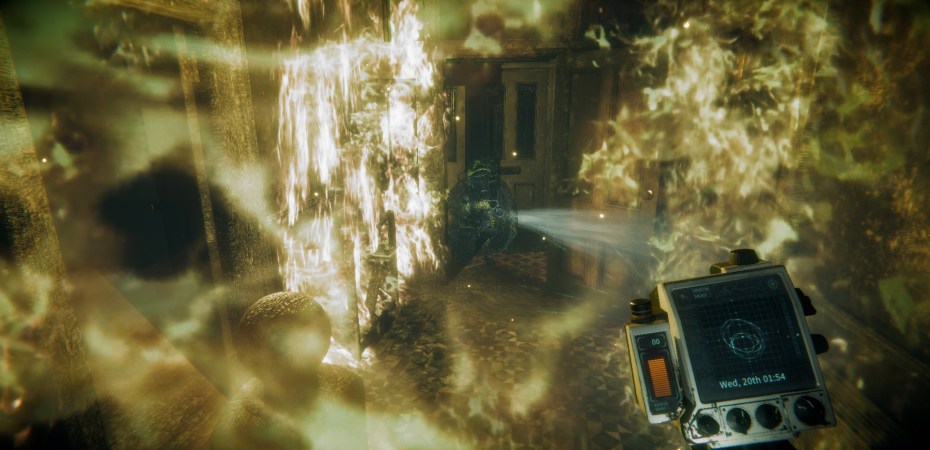
Eternal Threads is a 2022 branching narrative puzzle game, the debut title from Liverpool developers Cosmonaut Studios. It fucking rocks. Let me – I’ll just say that up front. This game slaps. It’s so good. This is not a game review site, but this game is amazing and I can’t reasonably talk about it without also telling you to go and play it. It’s mature, thoughtful, and human. It understands how actual people behave. It’s one of the only games I think I’ve ever seen where a middle-aged mum has agency and humanity and desire – where she makes decisions about her life instead of just waving farewell to her Pokemon trainer child. Back in 2020 I complained about the emotional maturity of video games – how even pretty good titles like The Gardens Between don’t reach any higher than ‘wow, childhood was great’. Eternal Threads has the ambition most other games are missing.

The game’s premise is that you’re some sort of time detective, tasked with protecting the timeline from corruption and interference. Your latest job is a house fire in England where six people died. You have to fiddle with the timeline until they make it through the night. Although that sounds like the pitch for a game dripping with gadgets and gizmos, in practice it’s a very low-key, intimate game about relationships and change. It’s the video game equivalent of a one room film: you spend the game inside the charred husk of a house, wandering from room to room and tweaking conversations and key decisions to unlock other moments further down the timeline. You have a little machine that shows you grainy figures from the past, talking and interacting, living their lives projected over the backdrop of this smoky blackened house, and honestly you mostly just listen. Each of the six main characters is at a turning point. Some of those turning points are major life events, and some are the smaller, softer decisions that we only really recognise in retrospect. Ben is a doctor who’s applied to work overseas. He’s trying to figure out how to tell his wife, Jenny. For her part, Jenny has just fallen pregnant, and hasn’t yet found a way to tell Ben. College student Neil is coming to terms with an anger problem, and his older, married sister Linda has moved in for the week. She’s taking some time away from her husband – they might be getting a divorce. Tom, the landlord, is horny and lonely, and he’s worried about his mum. Raquel is an art major who hasn’t let go of her past. The way that each person deals with their turning point shapes their ultimate outcome. If Neil doesn’t deal with his anger, on the night of the fire he will have been out drinking and brawling. He’ll be passed out in his room when the smoke gets him. If Tom remains isolated, he’ll trip down the stairs in the dark and break his neck. The game uses the night of the fire and the six fatalities to dramatise the risk and potency of each person’s turning point. When you make a big decision, it says, that could be it. It could be the big one – could determine the way things go for the rest of your life. Deal with your anger, or you’ll die in a fire.
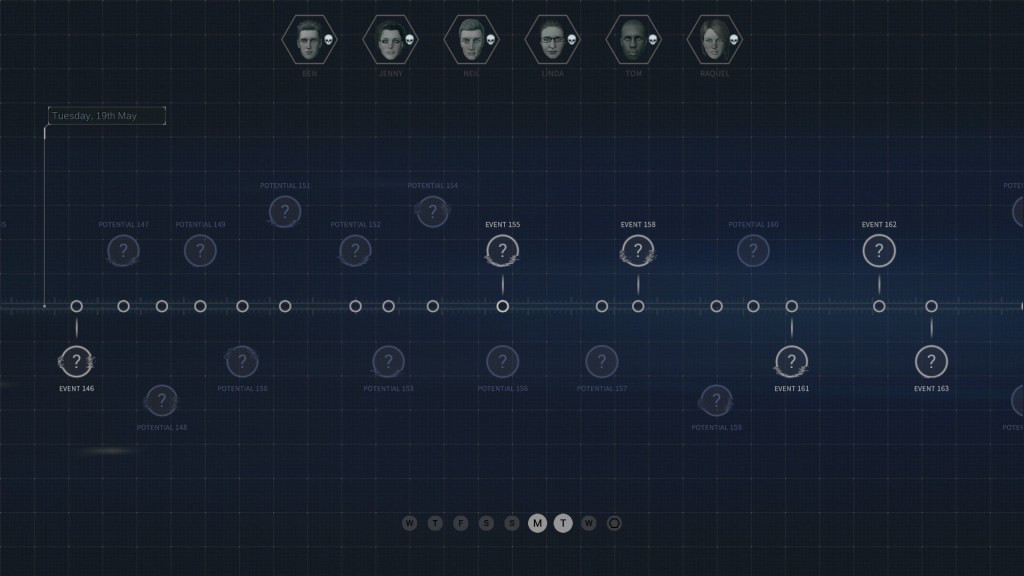
This concept of turning points is actually really crucial for Threads. It’s something most other ‘choice’ games never really touch on. In Mass Effect, for example, at the end of the first game you can choose to save the space council from the alien threat or you can let them get murdered. It’s a choice, sure, but there’s not really any thematic or narrative weight to it. There’s no resonance. It is, so to speak, just a choice. It doesn’t say anything deeper – it’s not used to explore some theme or idea about human nature. It’s Coke vs Pepsi – a decision in name, but mostly an issue of branding. Threads, on the other hand, is really concerned with the meaning of our choices. It has a lot to say about how we choose, why we choose, and about how the people around us help us make better decisions. Most of the positive decisions in Threads come about as a result of people connecting with each other. Characters open up to each other, but they also confront each other about their flaws and support them through their weaknesses. When Tom’s evil ex drops by during a party, the girls band together to save him. When Ben sees Neil’s knuckles, he lectures him about fighting and gives him a bike, encouraging him to find other ways of expending his energy. Threads goes beyond choice for the sake of choice, beyond purposeless choice, instead using it as a mechanic to say something about human nature. It uses choice to talk about the struggles we face and how to get through them. It doesn’t matter whether you’re applying for a job or finding out you’re pregnant or just trying to deal with your trauma, Threads says. In any setting, at every turning point, we’re better together.
 Death is a Whale