
At university one of the books I studied was Don DeLillo’s White Noise, a horrid, hollow little book about the emptiness at the heart of American culture. White Noise follows Jack Gladney, a university professor who works in Hitler Studies even though he can’t read German. He and his family go shopping and think about death while the rot of modern society hollows out any sort of meaning in their lives. It’s very much a book about fakes. Jack is a fake professor with an undeserved reputation, constantly anxious about being found out. There’s an organisation responsible for rehearsing evacuations in case of disaster (SIMUVAC): when a real disaster strikes, a spill of toxic gas, SIMUVAC uses the real event as a way to practice for their next rehearsal. Pop culture drains the life out of the world, with serious, traditional subjects like History or Music meme-ified into Hitler Studies or Elvis Presley research, and the unreal spaces of supermarket, mall, and TV all blur together into the white noise of the title. I thought it was a miserable book, and I said as much to my lecturer, who threw her hands up in the air and said “It’s supposed to be funny!” I want to acknowledge that this might be another Don DeLillo – maybe it’s just something where I don’t really get the joke. Let’s talk about Kafka.
Metamorphosis is a 1915 German novella published by Franz Kafka, one of the few pieces completed and sold during his lifetime. It’s one of those cult stories where even if you’ve never read it you know what happens. Gregor Samsa wakes up one morning and discovers he’s turned into a giant beetle. He doesn’t seem particularly surprised by this transformation, instead fussing about his job – which is part of how the book builds its sense of alienation, right, by having something wild happen and then nobody particularly reacts to it. The opening illustrates that basic logic. Gregor wakes up and discovers he’s turned into an insect. He looks at his hard carapace and his multiple legs, “pathetically thin compared to the rest of his bulk,” and then we have some context on his job (“Samsa was a commercial traveller”) and the weather (“raindrops could be heard beating on the metal window-ledge”). There’s no moment of – hang on, what the fuck, I’m a beetle – instead, Gregor simply accepts this new reality and moves on with the mundanity of his life. He tries to roll over, but can’t maneuver, and then he feels sorry about his awful job. “I’m saddled with the strain of all this travelling, the anxiety about train connections, the bad and irregular meals, the constant stream of changing faces with no chance of any warmer, lasting companionship.” It’s a maddening structure. The story opens with this inexplicable change and then refuses to explore any sort of psychic shock or process of acceptance. Becoming a beetle is as strange – as normal – as anything else in this world. You’re left with this crushing sense of dislocation, as the most obvious, compelling narrative question is passed over in favour of dawdling through the woes of a corporate functionary. As a reader, you feel like you’re going insane. He knows he’s a giant beetle, but he’s mostly moaning about the commute.
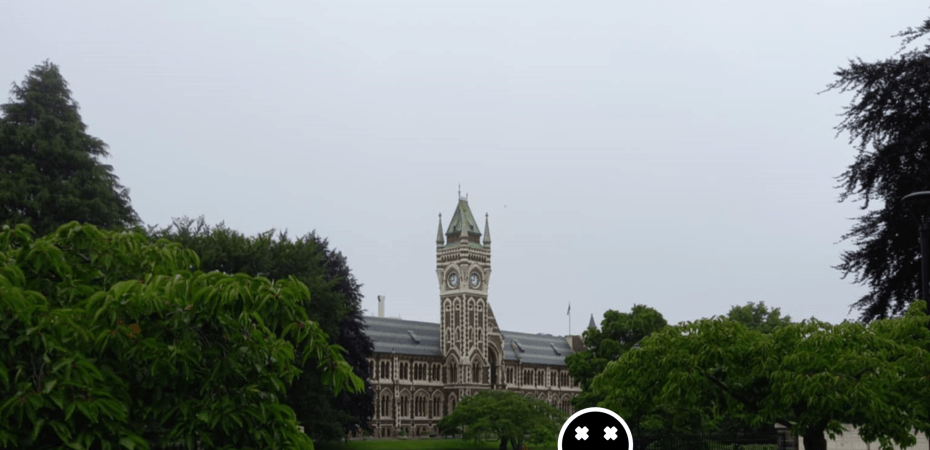
For me, most immediately, that feeling of surreal confusion lines up with my experience as an autistic person. There were definitely several points earlier in my life where I just couldn’t understand why we weren’t all talking about certain issues. When I moved to Melbourne and started routinely seeing homeless people, I had that moment of – hang on, why is this okay? Why’s everyone just walking past? It seemed insane to simply accept homelessness, to accept that this was the world we’d built – and I couldn’t really understand how anybody could go about their life knowing that this was happening. It’s a moral outrage. It seems like something that demands immediate, widespread outcry and a dedicated political solution. Similarly, I used to work at the University of Melbourne. Every day as part of my commute I went past Park Hotel, repurposed as a detention center for refugees and asylum seekers as part of Australia’s offshore detention program. It felt – again, genuinely insane to go to work and do anything with this horror show a few hundred metres away. It felt like a breach in reality, a surreal kind of un-logic, having to ignore this ongoing nightmare, condemned for years by the international community and even by the UN’s Human Rights Committee, and instead answer emails or play with spreadsheets. At the time it poisoned my view of Australia – I look back at it now not as a uniquely Australian problem but as a sickness in the world as a whole. Donna Williams, in her 1992 autobiography Nobody Nowhere, writes about modern society as fundamentally schizoid, divided from itself:
“I had to constantly trick myself that there was nothing personal or emotional in what I was doing, and constantly to hypnotize myself in order to calm down enough to allow some self-expression … perhaps, according to basic definition, this response is schizoid, but schizoid is not the same as schizophrenic. Look around you … it is a schizoid society in which we live. This is alienation.”
As an autistic woman herself, Donna Williams captures something core or at least common to the autistic experience. So often it involves this sort of internal dividedness. People come by and talk about their kids, talk about their weekends, and you have to pretend that you’re not thinking about homelessness. You have to make out like you’re not overcome by the indecency of the world. You have to pretend that you haven’t just turned into a giant beetle. That division is at the heart of Kafka. It is the incoherence of waking to find yourself transformed into an insect and setting it aside to worry about getting to work on time.
And that’s not to say that Kafka’s necessarily autistic. He might have been – it’s certainly been suggested – but there were other reasons for an Austrian Jew to feel alienated from society in the early 1900s. Really I don’t think it matters whether he was autistic. I’m not trying to set up a 1:1 correspondence between Kafka’s psychology and his artistic output. More to the point, I think these themes of alienation and dislocation speak to something profoundly true in our modern experience. I do think he’s onto something. What I don’t care for is his construction of helplessness.
While the narrative structure of Metamorphosis revolves around alienation, the dogged refusal to engage with the most pressing and obvious narrative concerns, the story’s setting is rooted in toxic familial connections. Gregor’s family exists within a web of various forms of helplessness, all prevailing on each other in a pathetic, sickly codependency. Gregor works to pay off his parents’ debts. He supports them in their financial helplessness, which superficially seems kind and decent, but his heart’s not in it. “The money was gratefully accepted, he provided it gladly, but it no longer gave rise to any special warmth of feeling.” Resenting the reality of working a job and supporting his family, Gregor projects a form of escape onto his sister, Grete, who he plans to send to study music. “It was a secret plan of his that she, who unlike Gregor was a keen music-lover and could play the violin most movingly, should be sent next year to the Conservatory.” Notice that Gregor’s plan is a secret, that Grete is to be sent rather than going of her own volition. Grete has no agency here. Gregor’s trying to live vicariously through her. He’s not treating her as an individual with her own agency – he sees her as an emblem of his own innocence and creativity, and tries to direct her actions to satisfy his emotional needs. This is codependency. It’s cope. Gregor wants to be free, wants to pursue the arts, but he’s taken on this financial burden of looking after his family (oh no, poor baby). He resolves his unmet emotional needs by projecting them onto his sister, fantasising about orchestrating her life in such a way that he can live vicariously through her. He wants her life to fulfil his emotional needs.
Gregor’s plan in turn will deepen the family legacy of codependency and toxic sacrifice. It’s acknowledged in the text that his fantasy will drive the family into even worse financial straits: Gregor’s plan exists “regardless of the considerable expense involved, which he would have to try and meet in some other way.” There’s no plan, no proposed budget – just a deepening web of resentment. Gregor’s parents rely on his income. He plans to become dependent on his sister to fill his emotional needs, his fantasy of becoming an artist, and she would then be locked into place by the guilt of the family’s extra financial debt, taken on to fund her training. She wouldn’t be able to back out or change direction, because the family (meaning Gregor) will have sacrificed so much to get her there. If she blinks, if she gives up, if she decides she wants to do something else with her life – she’s wasted the opportunity. Gregor’s plan is essentially to reproduce in his sister the sense of dependency that he feels within himself. Men will literally send their sisters to the Conservatory rather than go to therapy.
This web of mutual codependency is reinforced by the traits of physical weakness that characterise the family. Gregor’s mother has asthma (“she found it a strain even to walk through the flat and spent every second day gasping for breath on the sofa by the open window”), while Gregor’s father is “an old man”, fat and slow, who “had not worked for the past five years”. Gregor in turn is struck by the physical incapacity of turning into a giant beetle. Waking on his back, he’s unable to get up. The first section is mostly concerned with his attempts to get out of bed and reach up high enough to unlock and open his bedroom door. He loses the ability to speak, and becomes increasingly conscious of himself as a burden. “He must for the moment keep calm and try, by exercising patience and the greatest consideration, to help his family bear the inconvenience he was bound to cause them in his present condition.” This framing conveys Gregor’s understanding of relationship as both threat and burden. There’s no reciprocity, no mutual support, no healthy give and take. Social relationships are jacketed into the vile, draining demands of burden and burdened. Gregor is in this sense immoderate. He throws himself from extreme to extreme. Discovering that he’s turned into a giant beetle is a logical extension of his basic interpersonal behaviour. He wakes to find himself involuntarily and permanently incapacitated. He is ejected from the role of provider, from the role of the burdened, and irrevocably cast as a burden. He becomes helpless, the child, the burden rather than the burdener.
Over time, Gregor’s attitude infects his family, dragging them into his toxic cycle of misery. They adopt helplessness as a natural and unavoidable consequence of being burdened. They discuss how they would like to move house, but give up on the idea, “since it was impossible to conceive how Gregor was to be moved.” It’s actually not that difficult – Gregor notes that they could just poke some air holes in a crate, like you’d transport any other animal – but it speaks to this sort of self-destructive passivity. “The main thing which kept them from moving was rather their utter hopelessness, and the feeling that they had been struck by a misfortune quite without parallel among all their friends and relations.” They become helpless in response to his helplessness, using him to justify and excuse bitter stagnation. It’s almost petulant. We’d like to move, but – oh, Gregor, it’s too difficult. What’s that? Move him like any other animal? Oh, it is too hard. Too hard!
At the end of the story Gregor does the decent thing and just fucking dies. He is a self-important burden-martyr, but in his death he releases his family from his toxic cycle. They suddenly develop agency in the story’s final line: “And it was like a confirmation of their new dreams and good intentions when at the end of the journey their daughter was the first to rise to her feet and stretch her young body.” The whole story’s about agency, really. It’s about agency in the context of disability. It’s about how you act when you can’t act and how inaction is its own perverse activity. It’s about the excuses we use to justify and rationalise a certain performative helplessness – alienation, while real, ultimately serving as just another excuse. Through all of this I’ve tried to stay away from the question of Kafka as an artist – I think many people treat him as working in a similar way to Lovecraft, projecting his neuroses or insecurities onto the page. That biographical reading conflicts with historical accounts of Kafka laughing with his friends during readings of his work, as if it was all some giant joke. I don’t think we need to resolve the question of Kafka’s laughter. It’s not about him. It’s about Gregor, and you, and what comes next.
 Death is a Whale